
Hidden Water Leak in St Heliers | Aries Builders Auckland
Sunday Evening Call-Out: Finding a Hidden Water Leak in St Heliers
It was a Sunday evening and I was just starting to relax at home when the phone went.
Water was coming into a downstairs bedroom in St Heliers and the carpet was getting soaked.
So, back in the trusty van and off we went.
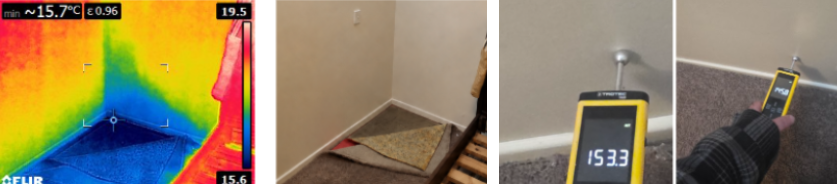
When I first walked into the bedroom, my immediate thought was that the water could be coming through the outside block wall. The room sits partly below ground level, there is garden on the other side, and this sort of water ingress is something we come across reasonably often.
But you don't want to start pulling things apart based on a guess.
A small fault causing a lot of water
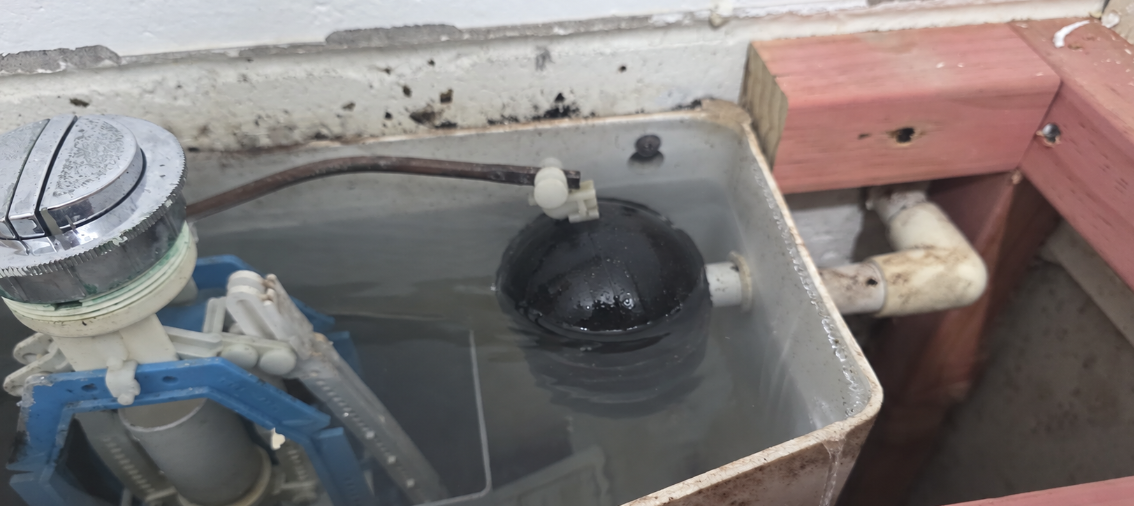
The float valve, or ballcock, inside the cistern had become caught against the pipework.
That meant the inlet wasn't shutting off properly and the cistern just kept taking on water. Because everything was hidden inside the enclosure and wall cavity, nobody could see what was happening until the water eventually showed itself in the bedroom next door.
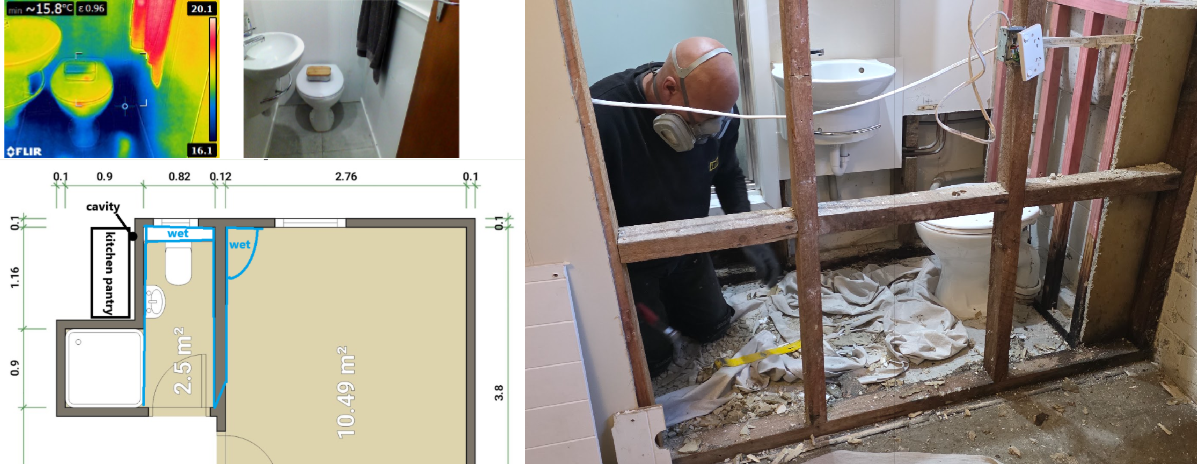
By this stage, the water had travelled along the bottom of the bathroom wall, through the framing area and into the adjoining bedroom.
The plasterboard was wet, the carpet and underlay were saturated, and there was water sitting on the concrete floor underneath.
Quite a bit of damage from one small mechanical fault.
Stop the water first
The first job was obviously stopping any more water coming out.
We freed the float mechanism so the inlet valve could shut off again, then arranged for the plumber to properly check and repair the cistern mechanism.
Then the messy work started.
We removed the saturated underlay, skirtings and damaged plasterboard so we could get air into the wall cavities.
Because the plasterboard was saturated and the moisture had travelled up the wall around the power points and wall lights, we also had the affected electrical circuits isolated before continuing with the strip-out and drying.
A large dehumidifier went in along with air movers to start pulling the moisture out of the building.
From there, it was a matter of letting the equipment do its job and returning to check the moisture levels before anything was closed back up.
Finding the leak is only half the job
Once everything had dried properly, we could start putting the room back together.
New wall linings, skirtings, stopping and painting were completed, the electrical fittings were checked and reinstated, and the flooring was put back as required.
The insurance claim was accepted and we were able to take the job from the initial Sunday evening emergency call, through the investigation and drying, and finally through to the repairs.
That's the part of water-damage work people don't always see.
Sometimes the water is nowhere near where the actual problem started.
You have to follow the evidence, test as you go, open up the right areas and work out why it happened before you start fixing the damage.
Otherwise, you're just repairing the symptoms and leaving the problem behind.
And sometimes what looks like water coming through a basement wall turns out to be a toilet quietly overflowing inside a wall.
That's building investigation for you.