The Damage You Can't See: Why Water Always Goes Further Than It Looks.
Water Damage: The Part You Can't See Is the Part That Costs You
Aries Builders has been repairing water damage across Auckland since 1988, and here's something that holds true across nearly 40 years of it: the water has almost always gone further than anyone first thinks.
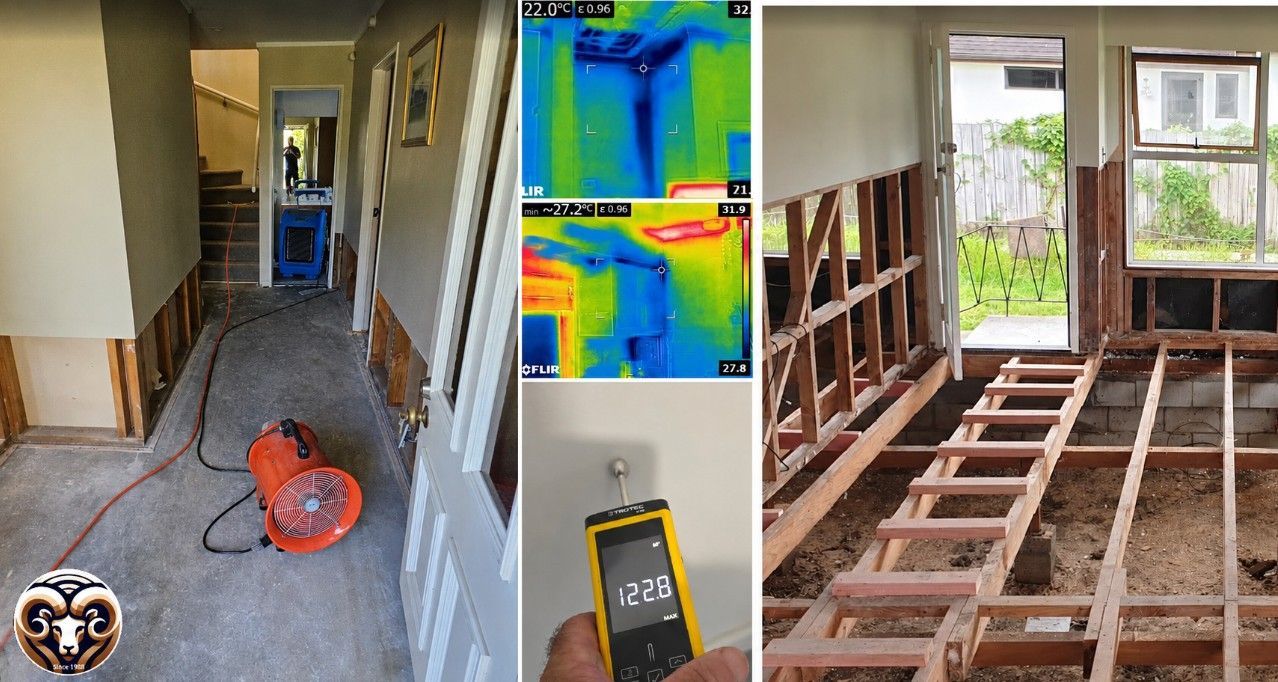
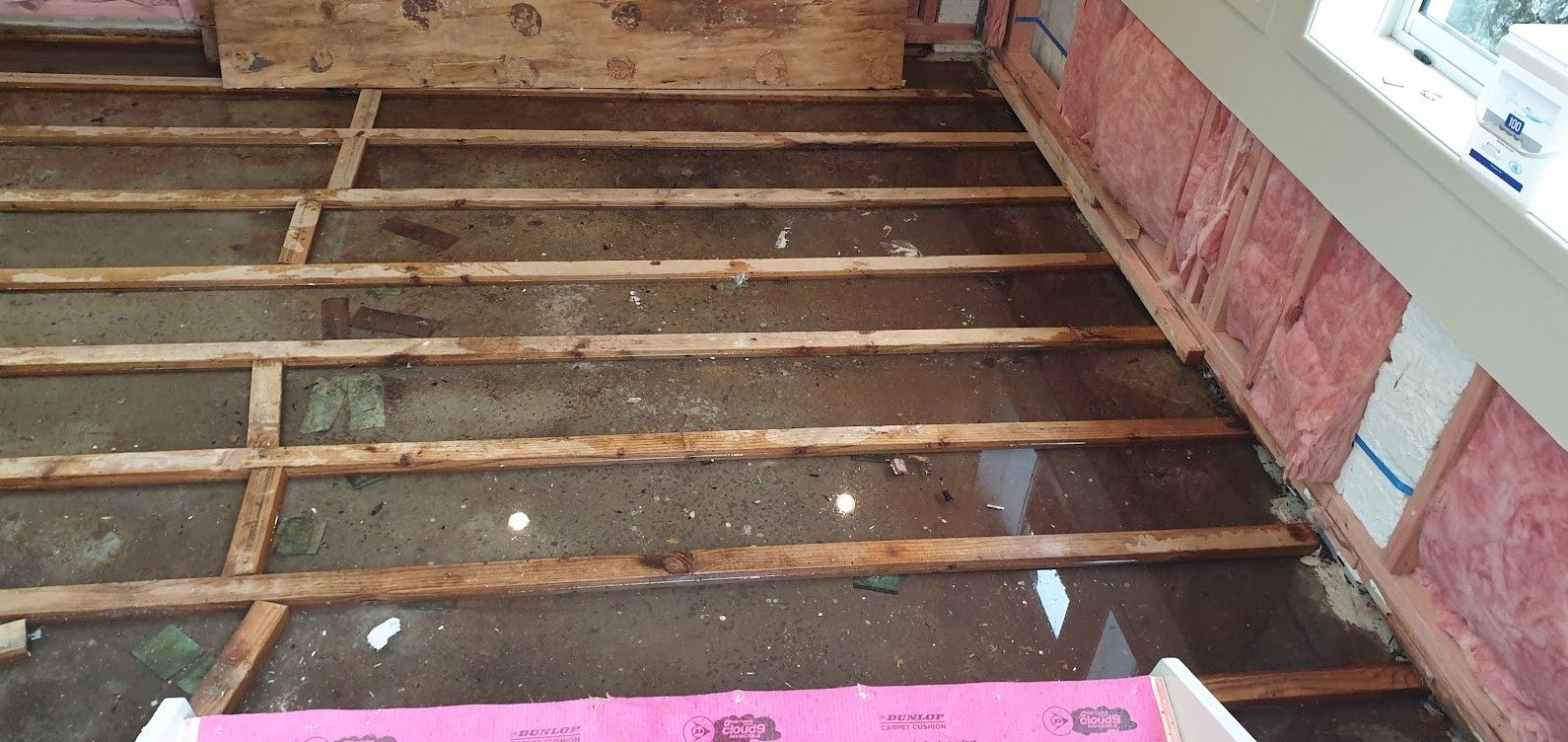
It runs behind the linings. Tracks along the framing. Sits quietly in the subfloor and under the flooring where a quick look won't find it. So when a property manager rings us after a leak or a flood, the first job is to work out how far it's really gone — because that shapes everything that follows.
And the first practical step on site is getting the drying underway. That means stripping out whatever's soaked up the water and can't be saved — saturated plasterboard, carpet, underlay, anything holding moisture — because the longer that stays in, the more you risk mould and rot setting in and the damage quietly spreading.
But here's the part that's easy to rush past when everyone wants it dry yesterday: we document everything before we start pulling it out. A full scope and a report — photos, moisture readings, the extent of the damage — recorded while it's all still there to see. Once it's stripped and dried, that evidence is gone, and that record is what backs up the claim later. Do it in that order and there are no arguments down the track about what was actually affected.
From there, some areas have to be opened up — not to make work, but because you often can't dry a wall or a floor properly, or see how far the water travelled, until you open it. Opening up the right spots is what stops further damage, not causes it.
Only then does the real repair begin — and it's rarely "just swap out the GIB." Depending on where the water reached, it can mean insulation, building wrap, framing, subfloor, flooring, joinery, waterproofing — plus Building Code compliance, and keeping tenants safe and the common areas protected while it all happens.
And that's before the coordinating even starts. The drying crew, the assessor wanting documentation and pricing, maybe an engineer needing a look, owners and tenants asking when they'll have their home back — usually all at once, usually with people still living in the building. It's a lot for one property manager to hold together. Honestly, that's the part we most like taking off their plate.
At Aries Builders we've been walking Auckland property managers and owners through exactly this since 1988 — getting the drying started, documenting it properly, confirming what's really been affected, scoping the permanent repair, working alongside assessors and consultants, and rebuilding in the right order so it's done once and done right.
The way we see it, you should be able to sit down with your builder and get straight answers: what got wet, what can be dried and saved versus replaced, what needs a specialist's eye, how long it'll genuinely take, and what paperwork you'll have for the claim. Honest answers, early — that's what keeps everyone on the same page and takes a bit of the stress out of a rough situation.