
Why Your Windows Are Crying Every Morning
Waking up to wet windows, water on the sills, and maybe a sneaky bit of black mould in the corner? First things first: you're not doing anything wrong. And no, your house isn't falling apart.
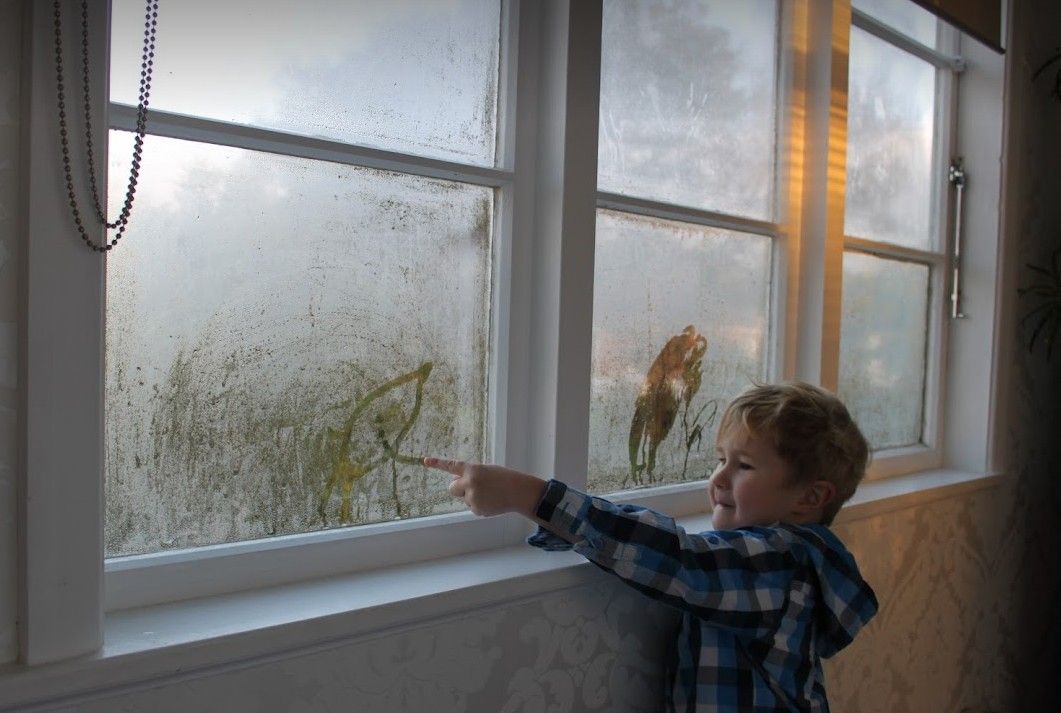
The picture above was taken many years ago, with my son drawing on the windows. We later replaced these with double glazing.
It's just winter doing its thing — and there's a surprisingly simple reason behind it.
Here's the short version: your windows drip the most on the coldest, clearest, most beautiful mornings. Sounds backwards, right? Stick with us — it actually makes perfect sense, and once you know why, it's easy to keep on top of.
The quick fix (for the busy ones)
If you just want it sorted, here's your cheat sheet. Do these and you'll cut condensation right down:
Open the windows for 10 minutes each morning — even when it's freezing. Letting the damp night air out makes a bigger difference than you'd think.
Use your bathroom and kitchen fans — and leave them running a few minutes after a shower or cooking.
Dry washing outside, not over the heater or a clothes rack inside. Wet washing indoors dumps litres of water into your air.
Wipe the sills down in the morning so the water isn't sitting there soaking into the timber day after day.
Pull furniture a few cm off cold outside walls so air can move behind it — that's where mould loves to sneak in.
That's honestly 90% of it. If you stop reading here, you've got what you need.
But if you're the curious type and you want to know
why
it happens — and when a wet window is actually telling you something more serious —
keep going.
👇

The deep dive (for the curious)
Why clear nights are the worst
Condensation is dead simple once it clicks. Warm air holds moisture. Cold air can't. So when the warm, damp air inside your home touches something cold — like a window — that moisture turns back into water and runs down the glass.
Now here's the bit nobody tells you:
glass radiates its heat straight out to the open sky. On a cloudy night, the cloud acts like a blanket and bounces some warmth back. On a clear night, there's nothing to stop it — so your glass actually drops
colder than the air outside.
That's why your windows can be soaking on a crisp, frosty, gorgeous morning, and bone dry on a grey, drizzly one. It's physics, not bad housekeeping. (We've just rolled into an El Niño winter too, which for Auckland often means more of those clear, cold nights — so expect a few wet mornings.)
Why some windows are way worse than others
Two things turn a bit of fog into a real problem:
Single glazing. One thin pane with nothing insulating it. The inside surface gets nearly as cold as the air outside — a magnet for condensation. (Double glazing has a sealed gap that keeps the inside pane warmer, which is why it barely sweats.)
Aluminium joinery. This one surprises people. Aluminium is a brilliant conductor — it carries the cold straight through from outside to in. So the
frame itself gets cold and starts sweating, which is why you'll often see water pooling along the bottom of the frame and soaking into the sill. Builders call it "thermal bridging" — the cold takes a shortcut straight through the metal.
If your home has single-glazed aluminium windows (a huge number of Auckland homes do), you've basically got the perfect little condensation machine.
Where all the water comes from
Just by living, we pump a lot of moisture into the air — cooking, showering, drying washing inside, even breathing and a couple of pot plants. A family of four can add several litres of water to their indoor air in a single day. With nowhere to go, it all lands on the coldest surface in the room. Usually the window.
When a wet window is trying to warn you
Most of the time, morning condensation is exactly what it looks like — a ventilation thing you can manage with the tips up top. But sometimes it's the first visible sign of a bigger moisture problem hiding in the building.
Be a little suspicious if:
Mould keeps coming back no matter how often you clean it.
Damp or staining shows up away from the windows — on walls, ceilings, in wardrobes, behind furniture.
Paint is bubbling, timber feels soft, or frames are starting to rot.
One room is always far worse than the rest, for no obvious reason.
Those can point to poor ventilation, a hidden moisture source, or even a slow leak that's nothing to do with the weather — and left alone, that's the stuff that quietly damages framing, linings and your family's health.
That's our day job at Aries Builders: finding
where the moisture is really coming from, testing it properly, and sorting it before it becomes a big, expensive repair. If you're not sure whether you've got simple condensation or something going on behind the walls, it's always worth getting experienced eyes on it.
A wet window on a clear winter morning is usually nothing to worry about. But it pays to know the difference — because the homes that catch a moisture problem early are the ones that never end up with the big one.
Aries Builders Ltd has looked after Auckland homes since 1988 — leak investigation, moisture testing, insurance reports and repairs. If something doesn't feel right with damp or water in your home, get in touch. Happy to take a look.