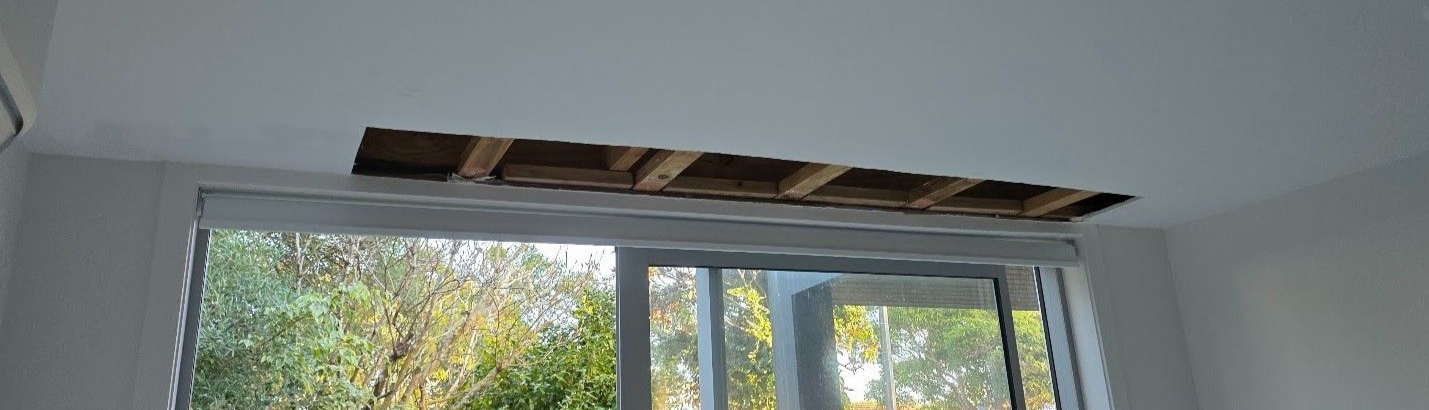
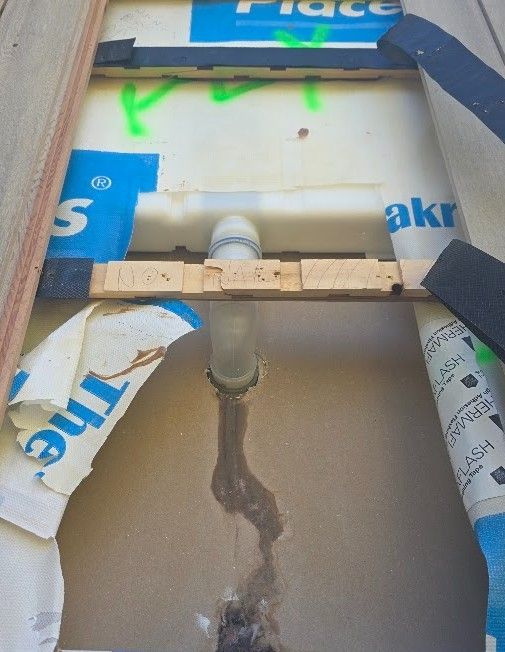
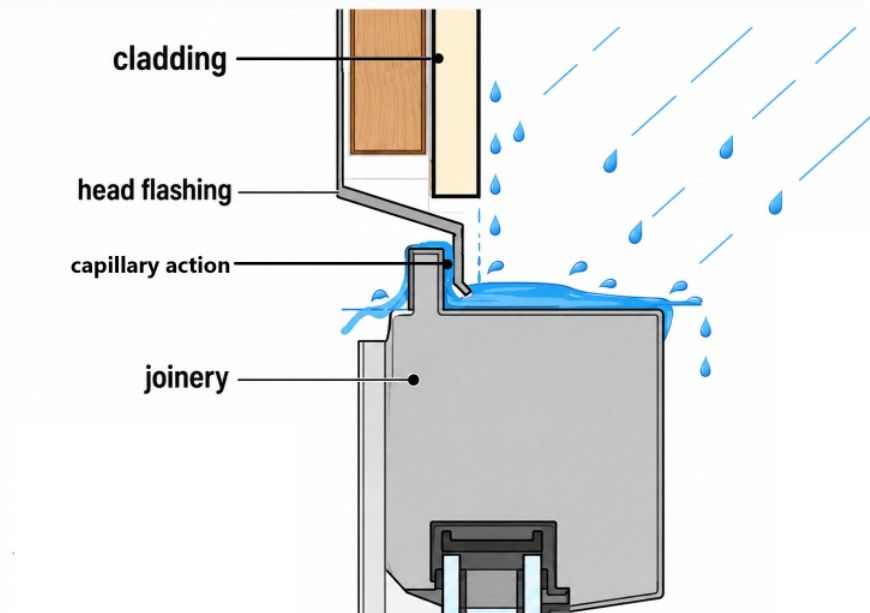
We were called to a home where moisture was getting into a bedroom during heavy rain. The wall in question had an aluminium ranch slider, cedar cladding, and a drained cavity behind it — a modern, well-built wall system. On paper, it shouldn't leak.
Here's how the investigation went, and what we found. Because what we found is something worth knowing about if you own a home with aluminium joinery.
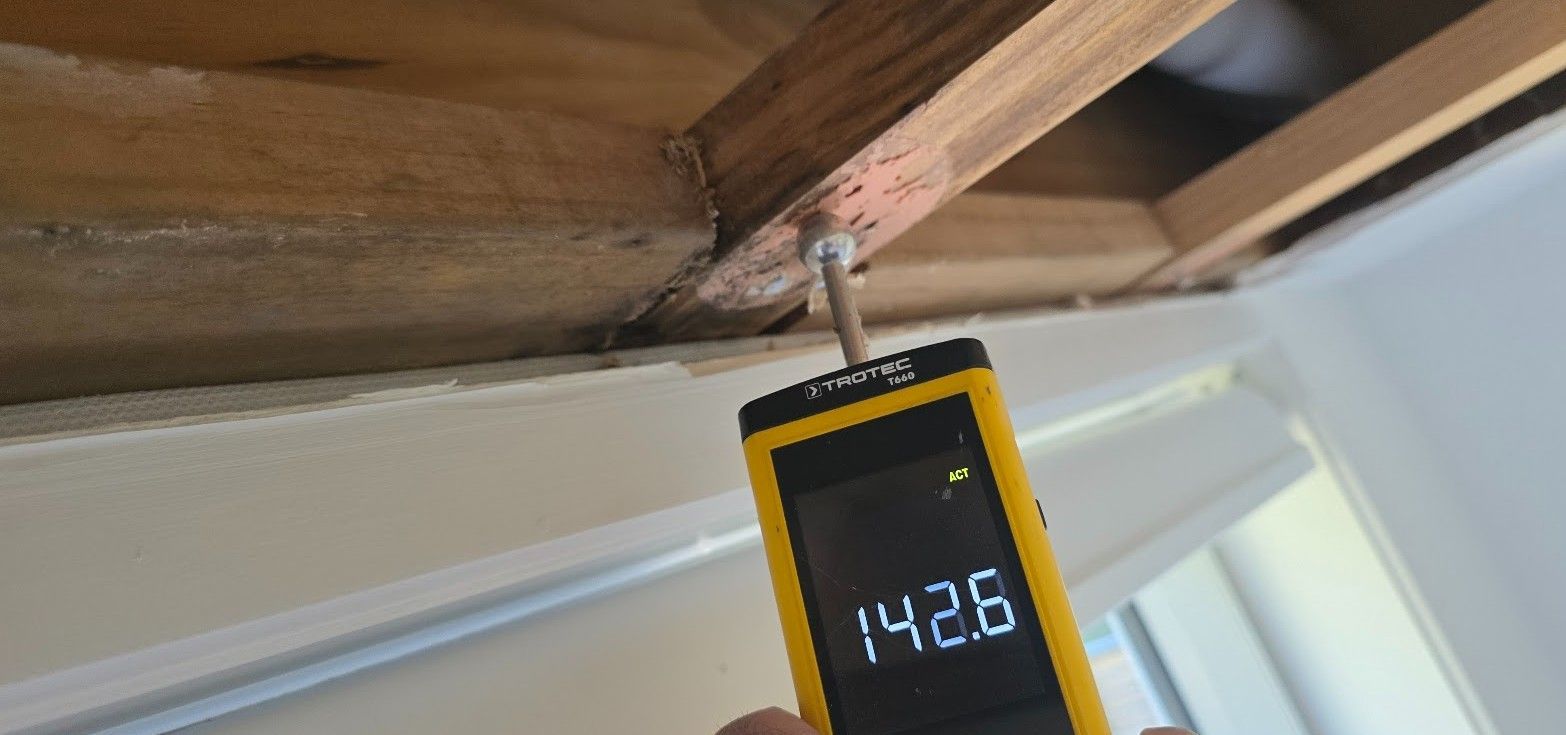
Second round: the readings climb again
With the toilet fixed and the wall dry, we water tested again. This time we focused on the head flashing — the metal flashing that sits over the top of the ranch slider to shed water away from it.
Spray water around that flashing and the moisture readings inside started climbing, fast.
So we removed cladding above the door to check the usual suspect: water getting up behind the cladding and into the cavity. And here's the interesting bit —
everything behind the cladding was dry. The building paper ran correctly down the flashing tape was on properly. Cavity battens all correct and it was dry inside the cavity. The wall was doing exactly what it was designed to do.
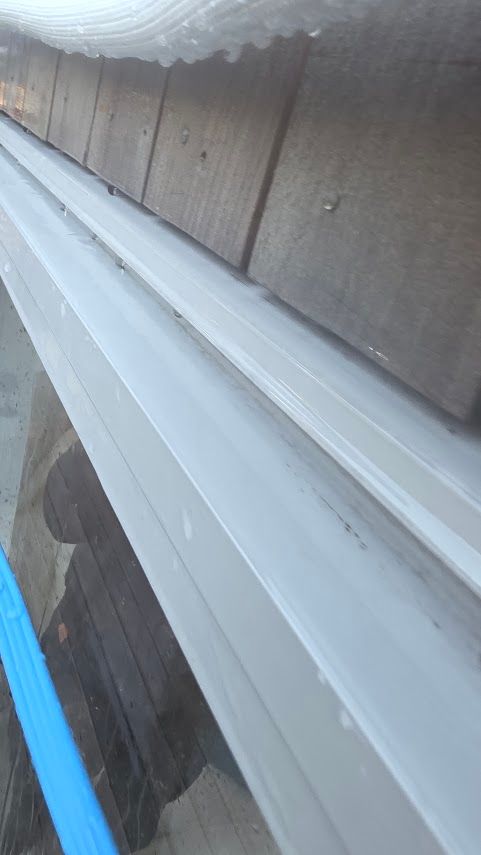
The water wasn't going through the wall. It was travelling along the flashing itself.
Why this matters for homeowners
A leak like this will beat a visual inspection every time. Stand outside and look at that flashing and it looks fine — because it is fine, right up until the rain is heavy enough for water to pond on it. That's why our process is:
- Test, don't guess. Controlled water testing with moisture readings tells you where water gets in, not where it looks like it might.
- Open up and verify. Removing a few boards to see what's actually happening beats theories.
- Keep going past the first answer. The toilet leak was real. It also wasn't the whole story.
Aries builders approach:
examine, test, diagnose — and don't stop at the first thing you find.
The fix
A leak like this gets fixed in two stages — and the first stage is really a test.
First, we proved the diagnosis. We fitted a rubber flange into the gap between the flashing's drip edge and the joinery — physically blocking the slot the water was climbing through. Then we dried the room out properly and water tested again, same spray method, same spots. This time, nothing. The readings stayed flat. With the slot blocked, the water had no way in — confirming the capillary path was the culprit beyond any doubt.
Then, fix the geometry for good. The flange proved the diagnosis, but it's a block, not a repair. The permanent fix is a head flashing that removes the problem instead of plugging it: proper fall so water runs off instead of sitting, and a drip edge that extends out past the front of the joinery's flat head — so when water lets go of the flashing, it lands clear of the shelf entirely. No shelf for water to pond on, no narrow slot for it to climb. A sealant bead at the back junction goes in as a second line of defence, but the flashing shape does the real work — sealant ages and moves, the flashing doesn't.
That last point matters. It's tempting to fix a leak like this with sealant alone, and it would work — for a while. But sealant is the one part of that junction with a use-by date. Fix the shape of the metal and the junction works forever, sealed or not.
First, prove the diagnosis. We fitted a rubber flange into the gap between the flashing's drip edge and the joinery — physically blocking the slot the water was climbing through. Now we're drying the room out, and once it's dry we'll water test again with the same spray method. If the readings stay flat, we've confirmed the capillary path was the culprit beyond any doubt. That before-and-after test goes in the job file.
Then, fix the geometry. The permanent repair is a head flashing that removes the problem instead of plugging it: proper fall so water runs off instead of sitting, and a drip edge that extends out past the front of the joinery's flat head — so when water lets go of the flashing, it lands clear of the shelf entirely. No shelf for water to pond on, no narrow slot for it to climb. A sealant bead at the back junction goes in as a second line of defence, but the flashing shape does the real work — sealant ages and moves.