Across Auckland, many of the most serious building problems we deal with aren’t the ones you can easily see. They’re the ones developing quietly behind walls, under balconies, inside roofs, and beneath bathrooms — sometimes for years — before they finally show themselves.
By the time staining appears, mould becomes persistent, or linings start cracking, what could have been a relatively contained repair has often already turned into a much bigger job, and in many cases, an insurance claim.
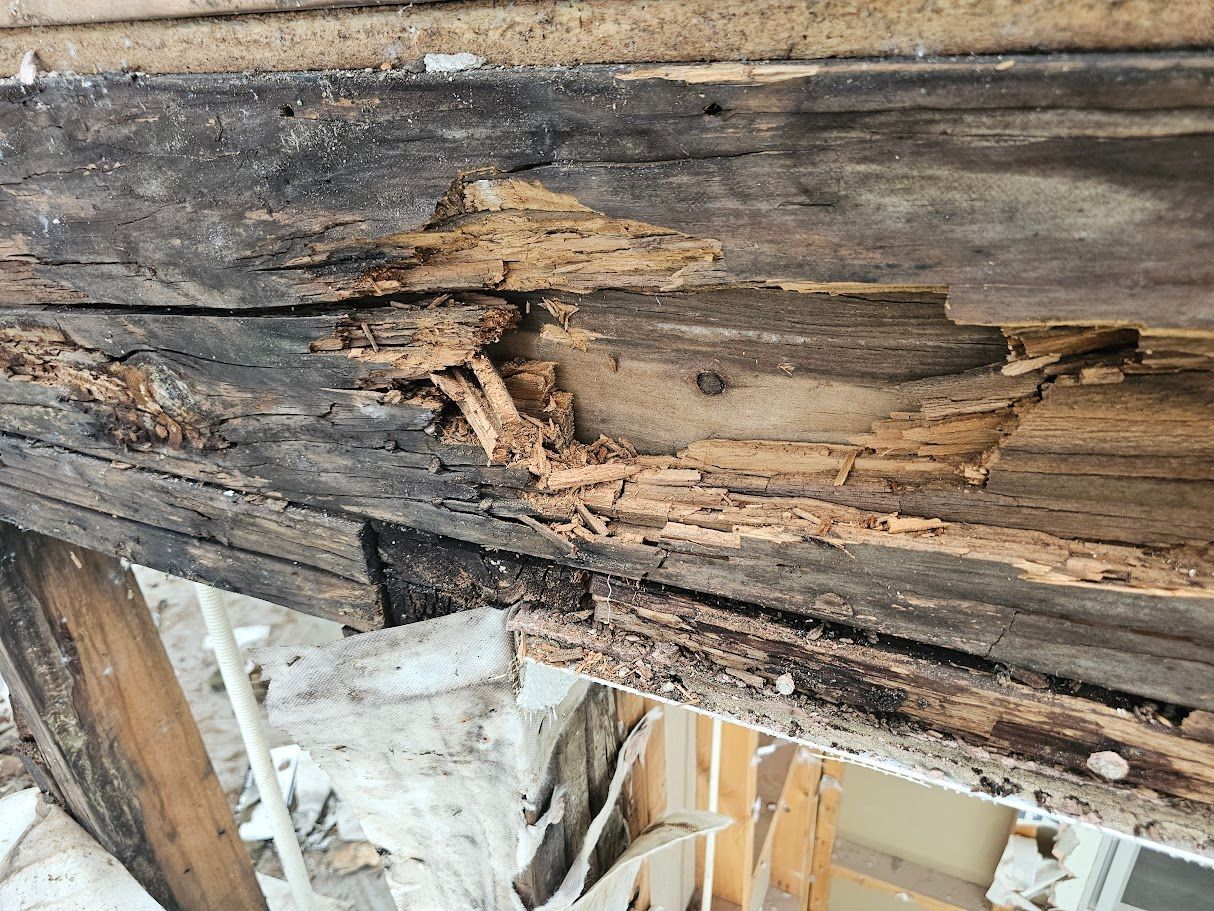
From what we see working across East Auckland, the North Shore, and coastal areas on both the east and west coasts, Auckland homes are exposed to a unique mix of conditions that make hidden defects especially common.
This article outlines the hidden issues we most often uncover, why they develop, and some of the early warning signs homeowners should never ignore.
Why Hidden Defects Are So Common in Auckland Homes
Auckland homes sit in a challenging environment.
High annual rainfall, wind-driven weather systems, salt-laden coastal air, and long periods of humidity all put constant pressure on building materials and waterproofing systems.
Add to that the huge number of homes and apartments built between the 1980s and early 2000s — a period where many construction methods and materials were later found to be problematic — and you have the conditions for defects to quietly develop over long periods.
We see different patterns depending on location:
- Along the
east coast and North Shore, salt air and onshore winds often accelerate corrosion and concrete breakdown.
- On the
west coast, stronger weather systems and driving rain place extra strain on roofs, claddings, and building junctions.
- Across the wider Auckland region, aging waterproofing systems, complex rooflines, internal gutters, and flat roofs continue to be high-risk elements.
Once moisture finds a way into a building, it rarely stays where it enters. It tracks through framing, insulation, and floor systems — and that’s where the real damage usually starts, out of sight.
The Most Common Hidden Defects We Find
1. Concealed Water Ingress
Water entry is, by far, the most common cause of hidden building damage.
We regularly trace moisture back to issues such as:
- Failed shower and balcony waterproofing
- Window and door junctions
- Roof penetrations and deteriorated flashings
- Internal gutters and box gutters
- Aging sealants and cracked exterior finishes
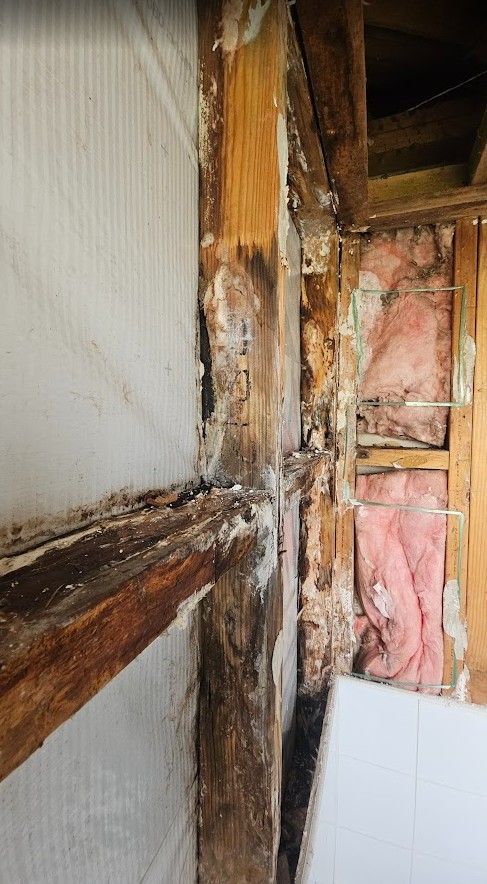
What catches many homeowners out is that water rarely shows up at the point it enters. We often open walls expecting a small local repair and find moisture has travelled a long way from the original source.
Once moisture gets into wall cavities or floor systems, that’s where the real damage starts — and it usually happens quietly, with very little visible warning.
2. Rotten or Weakened Structural Framing
When timber stays damp over long periods, we commonly start to see things like:
- Timber rot
- Loss of structural strength
- Corrosion of fixings
- Floor deflection and movement
- Doors and windows going out of alignment
In many Auckland homes — especially those from the leaky-building era — damage is frequently discovered in:
- Bottom plates
- Balcony support framing
- Roof structures
- Bathroom and laundry walls
- Window sills and trimmers
These areas can still look visually acceptable while being structurally compromised behind the surface. It’s not uncommon to remove a lining that appears fine, only to find framing that can be crumbled by hand.
3. Concrete Spalling and Reinforcement Corrosion
In coastal suburbs and older apartment buildings, we regularly encounter:
- Rusting reinforcing steel
- Cracking and delamination of concrete
- Balcony edge failure
- Deteriorating soffits and slabs
As reinforcing steel corrodes, it expands. This forces the surrounding concrete apart from the inside. By the time cracking becomes obvious, this process is often well advanced.
Left too long, it stops being a cosmetic problem and becomes a safety and structural issue.
4. Failed Building Paper and Cavity Systems
Behind claddings, many older homes rely on systems that were never designed to perform indefinitely.
We commonly find:
- Deteriorated building wrap
- Poor or non-existent cavity drainage
- Blocked or missing weep paths
- Outdated installation methods
When these systems stop doing their job, moisture has nowhere to go. It sits there — and that’s when decay really takes hold.
5. Progressive Balcony and Deck Failure
From what we see on site, balconies and decks are easily some of the highest-risk parts of Auckland homes.
We frequently uncover:
- Failed waterproof membranes
- Incorrect falls and drainage
- Inadequate upstands and junction detailing
- Water tracking back into internal floor systems
- Rusted fixings and framing breakdown
Because balconies and decks directly connect exterior exposure to internal structure, defects here often lead to widespread hidden damage before any visible signs appear.
Early Warning Signs Homeowners Should Not Ignore
Some of the most important indicators we encourage homeowners to take seriously include:
- Persistent musty smells
- Bubbling paint or swollen linings
- Hairline cracking that continues to grow
- Soft or springy floors
- Repeated mould cleaning with no lasting improvement
- Doors or windows suddenly sticking
- Tile grout cracking or lifting
- Unexplained moisture readings
These symptoms are rarely “just cosmetic.” They’re often the surface expression of deeper issues developing within the structure.
How Small Defects Turn Into Insurance Claims (and Often Coverage Issues)
Most large claims we become involved in started out as relatively minor water entry.
Because moisture damage spreads slowly and invisibly, homeowners are often unaware of the scale of deterioration until linings are removed. Once areas are opened up, it’s not unusual to find:
- Saturated insulation
- Timber decay and fungal growth
- Corroded fixings and framing breakdown
- Non-compliant or unsafe building elements
- Extensive hidden mould
What a Proper Building Assessment Actually Involves
A meaningful assessment is more than a visual walk-through.
In our experience, it should involve:
- Moisture testing in high-risk zones
- Understanding the building era and materials used
- Investigating known failure points
- Tracing likely water pathways
- Reviewing cracking, movement, and structural behaviour
- Considering compliance and long-term durability
In many cases, selective opening of linings is the only way to accurately understand what is happening inside the structure.
Repair vs Replace — Why Early Action Matters
When defects are identified early, options are usually much broader:
- Drying rather than demolition
- Localised repairs rather than structural rebuilds
- Protective coatings rather than full system replacement
- Planned maintenance rather than urgent remediation
Once decay advances, replacement becomes unavoidable.
In our experience, time is the biggest thing that turns small defects into big bills.
Final Thoughts
Hidden defects are rarely sudden events. They’re slow processes that quietly develop until a tipping point is reached.
Understanding how Auckland homes actually age — and where they tend to fail — gives homeowners a real chance to step in before small problems turn into major projects.
Early assessment, proper investigation, and informed repair decisions are what protect not just the building, but the people living inside it.