When Steam Takes Over: An Unprecedented Hot Water Cylinder Failure

Geoffrey Budge • April 3, 2026

What happens when a hot water cylinder doesn’t leak… but fills an entire home with steam?

In the world of building remediation, we occasionally encounter the unexpected. Recently, we dealt with a truly unique event: a hot water cylinder failing from the top, unleashing steam throughout an entire home. Here’s the story of how steam found its path and how we brought the situation under control.

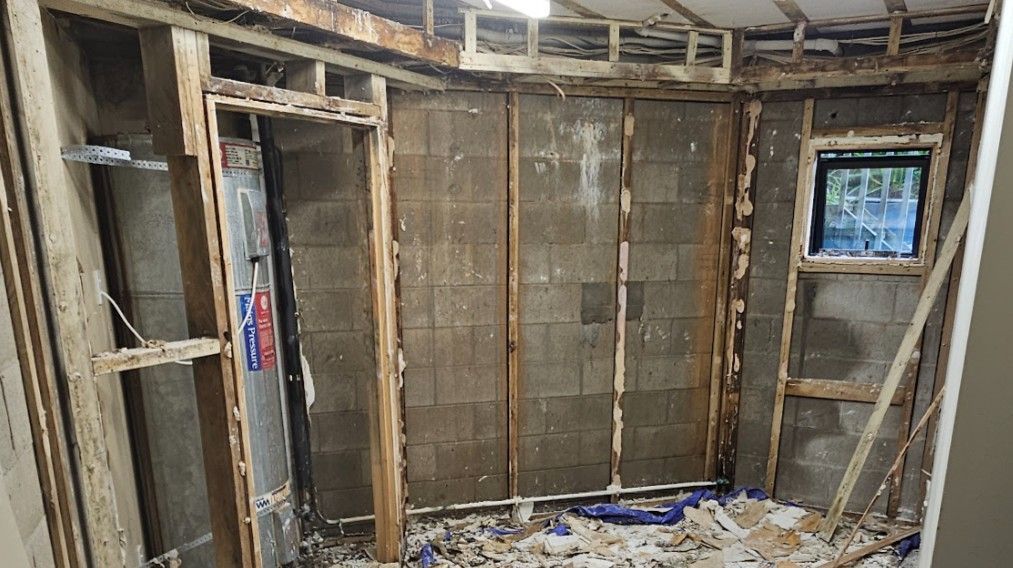
Our team at Aries Builders was called in after a homeowner noticed unusual moisture and suspected a roof leak. What we discovered was far more uncommon. A large hot water cylinder with dual elements had failed at the top. The continuous operation of the faulty cylinder produced substantial volumes of steam—enough to permeate multiple rooms. The steam traveled through a concrete floor service penetration, migrated into ceiling cavities, and eventually even affected the roof structure.


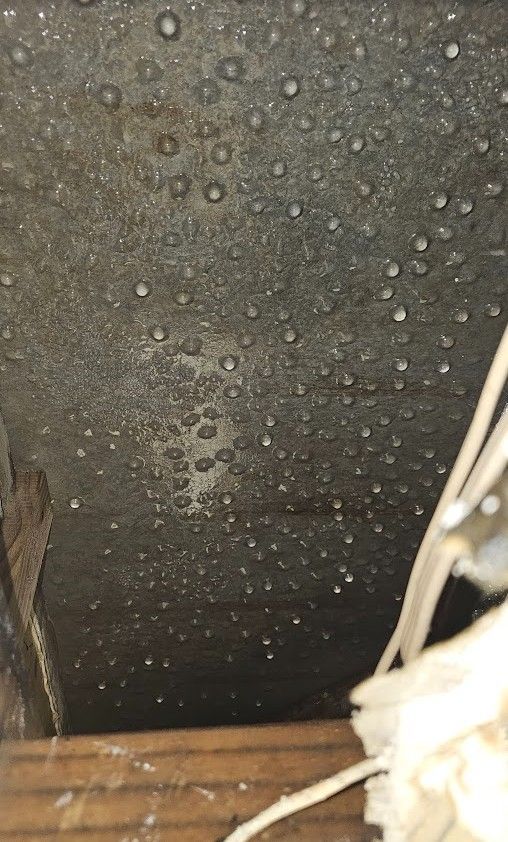
In fact, the steam pressure was enough to lift the torch-on roofing, leading the homeowner to believe a leak was in the roof membrane. It was only after thorough thermal imaging and moisture testing that we pinpointed the true source—the unusual top-end cylinder failure.


This event showed just how much steam a large cylinder can produce under failure conditions. Between tens to hundreds of liters of water per day can be released as steam, saturating plasterboard, framing, and ceiling linings. In this case, steam spread from ground level all the way to the upper floors, impacting several rooms.
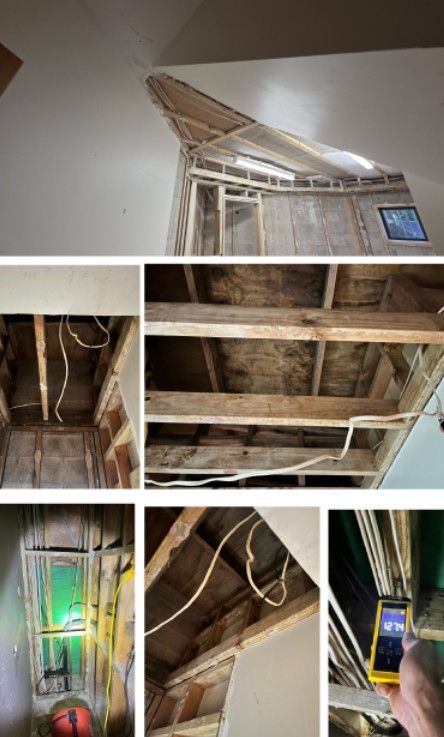
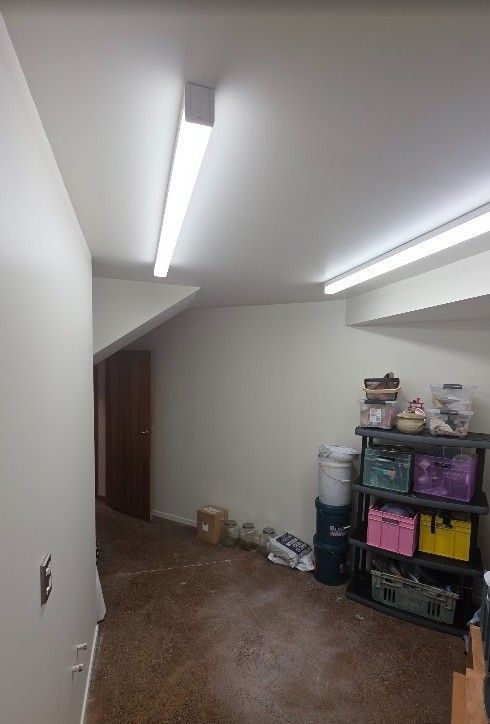
A 300-liter hot water cylinder contains 300 kg of water. If it boils off, converting water to steam at 100°C, each kilogram produces about 1,670 liters of steam at atmospheric pressure. Thus, 300 kg of water could yield roughly 501,000 liters of steam. In confined spaces, steam travels readily through openings, driven by pressure and temperature differences, moving upwards through penetrations and cavities. With enough volume, steam can saturate multiple floors and even press into ceiling voids, especially if ventilation is poor. In short, a failed large cylinder can rapidly fill enclosed cavities with enormous moisture loads, spreading far beyond its origin. On the first level, the steam migrated through the bulkhead, impacting both the bathroom and storage room. As it rose upward, the steam settled on the plywood beneath the torch-on roofing membrane. Due to the lack of roof space ventilation, the steam had no escape route, causing it to condense on the plywood as it cooled. This condensation dripped down onto the ceilings of the bathroom and toilet below. Additionally, a service duct running up the back of the pantry area became a conduit for steam, leading to complete saturation of these areas, as evidenced by moisture readings showing full saturation. In these affected areas, the  prolonged steam exposure had a dramatic effect on the plasterboard—it lost its structural integrity entirely. The bonding of the plasterboard disintegrated under the heat, effectively reverting the board back to a soft, paste-like state—almost like raw plaster. It was astonishing to witness how the steam’s intensity broke the material down to that extent.

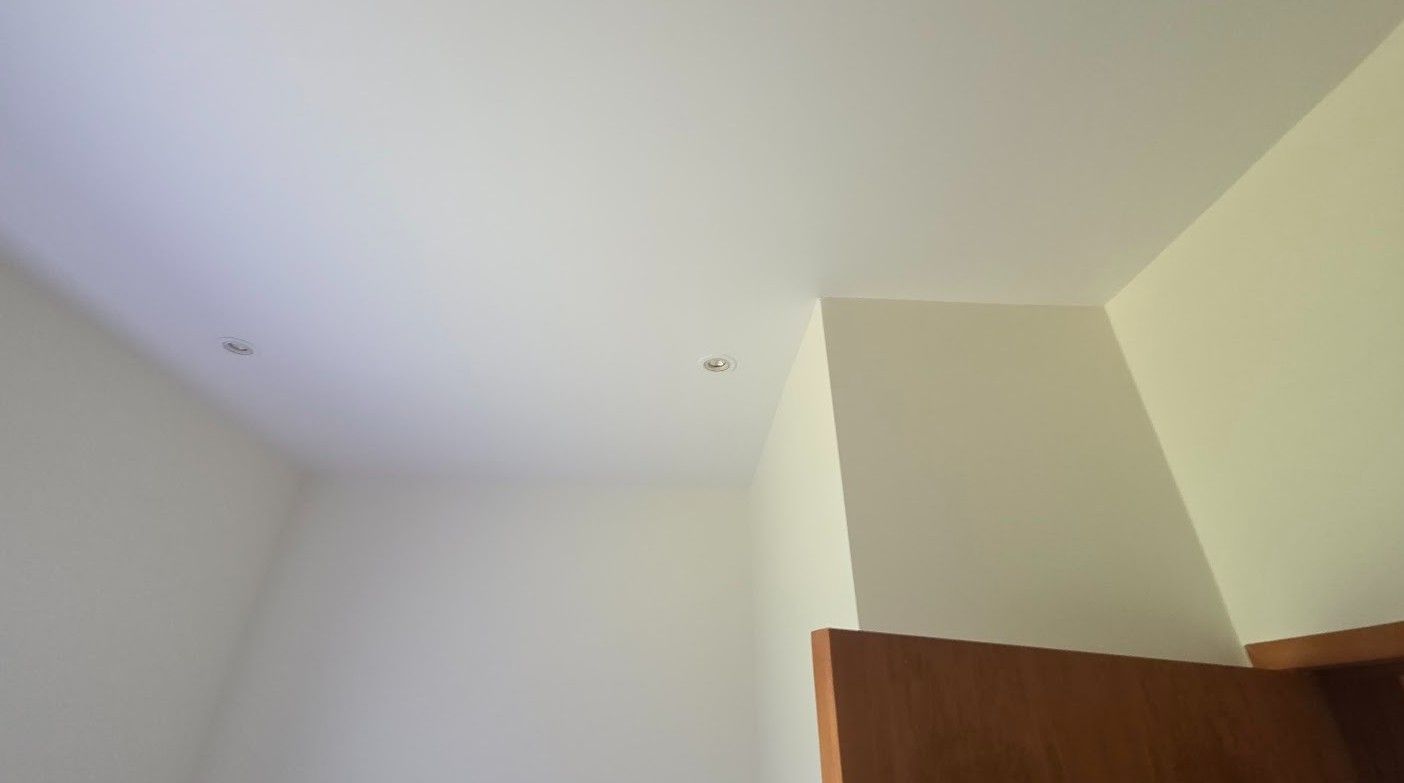
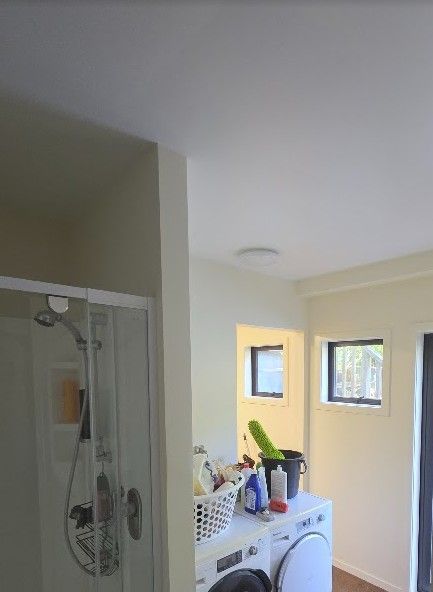
Once Aries had thoroughly dried out the property, we set about restoring it to its former glory. Every affected area was replastered, repainted, and finished with care. By the end of the project, the home was dry, refreshed, and looking as good as new—leaving the client completely satisfied with a renewed space and peace of mind.