
The Hidden Cause
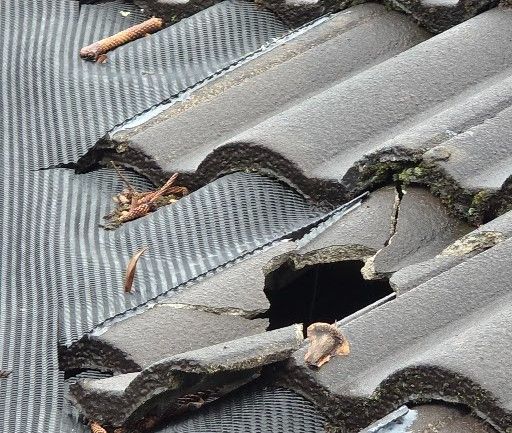
At the time, this damage likely went completely unnoticed. There were no immediate signs inside the home, no visible leaks, and no reason for concern.
But that break created a direct entry point into the roof.
Sometimes the smallest things cause the biggest problems.
At this property in East Tamaki, what started as a seemingly harmless event during summer quietly set the scene for a major internal water issue one that only revealed itself when the weather turned.
The Hidden Cause
At the time, this damage likely went completely unnoticed. There were no immediate signs inside the home, no visible leaks, and no reason for concern.
But that break created a direct entry point into the roof.
When the Rain Arrived
Fast forward to a period of heavy rain and wind — and that opening became a major problem.
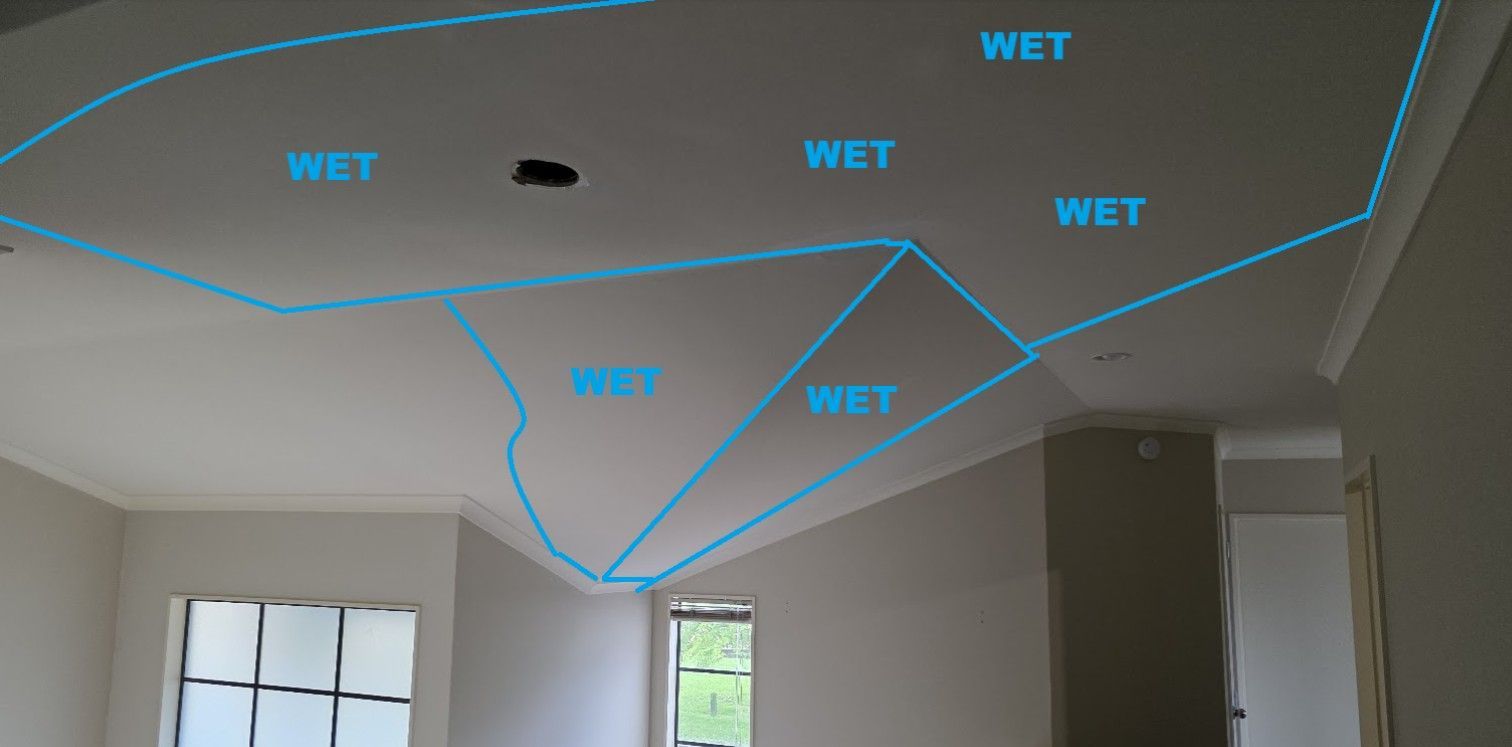
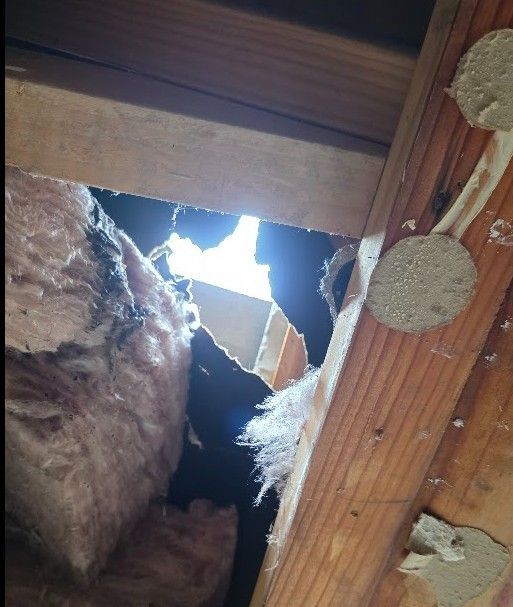
Water was driven through the damaged tile and tracked down, making its way into the ceiling cavity and through to the interior.
By the time we arrived on site, water was actively dripping through a ceiling light fitting, with tenants placing buckets and towels to catch it.
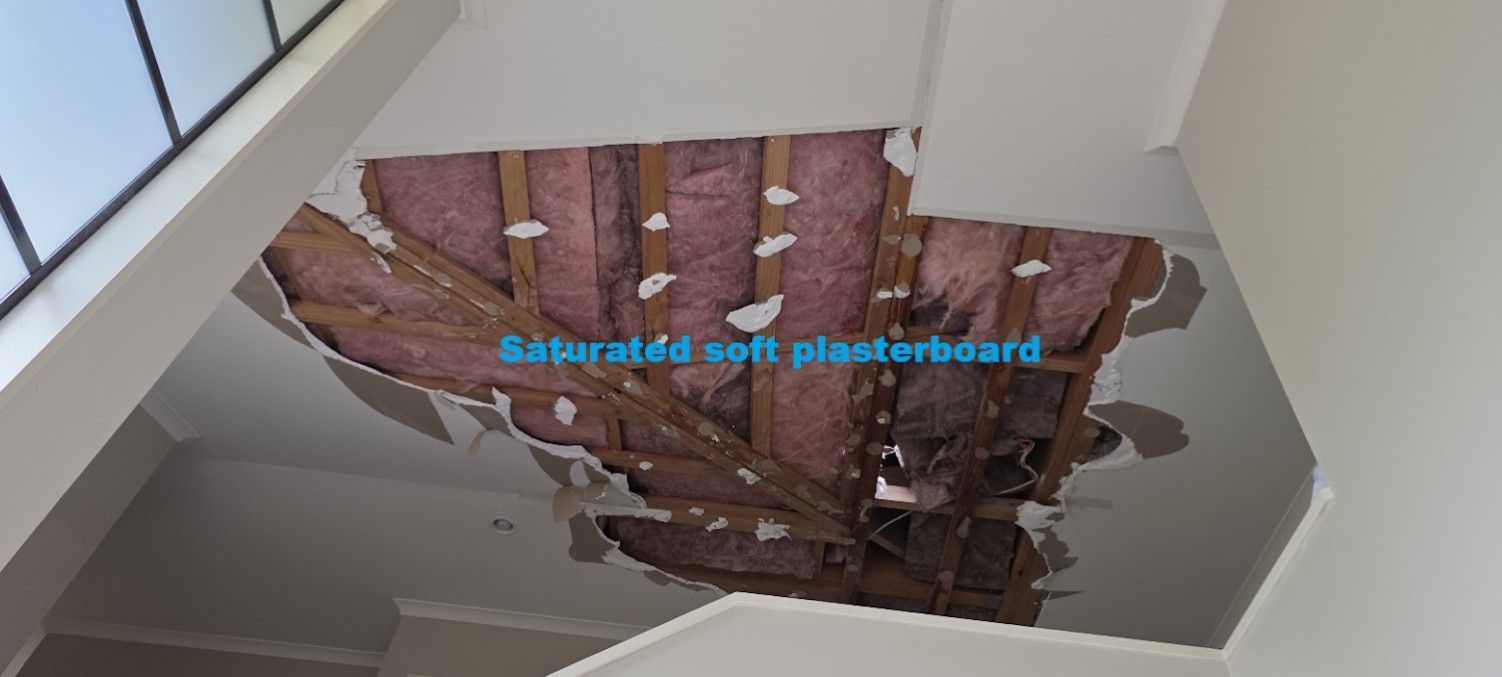
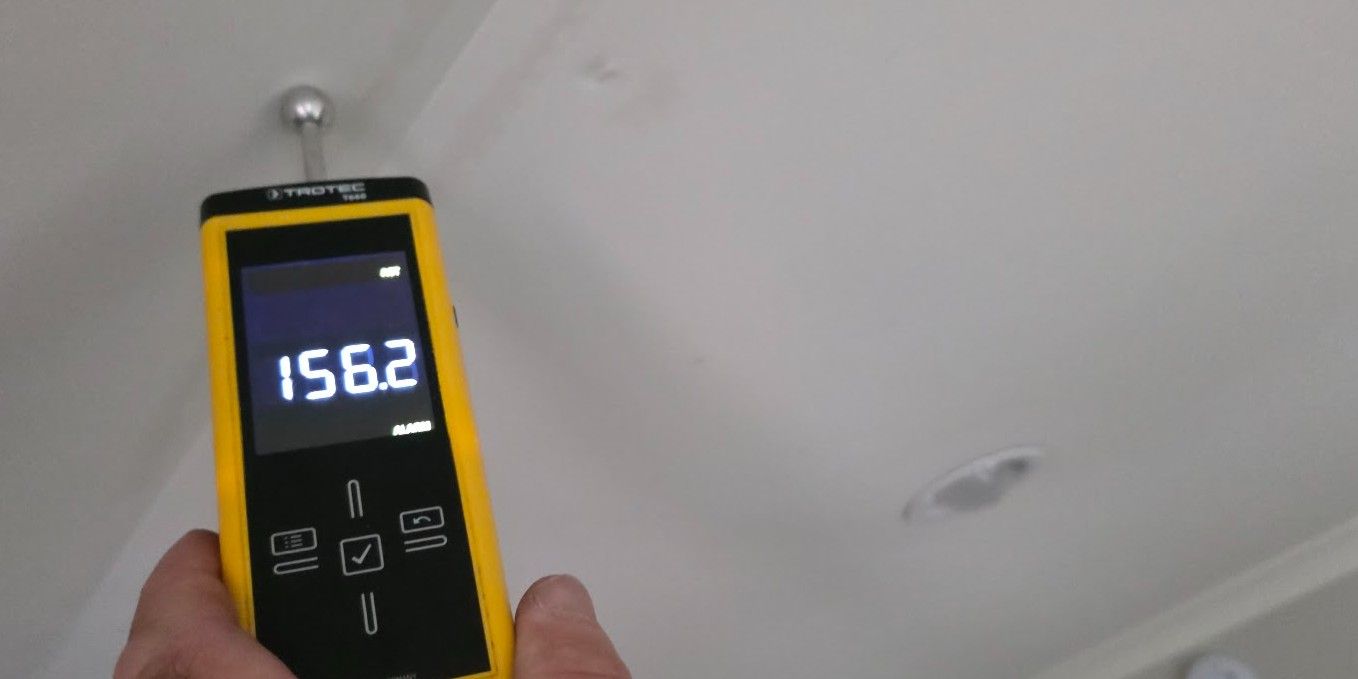
Moisture readings throughout the ceiling area were well above safe levels, confirming full saturation of the plasterboard and insulation.
Once we opened up the ceiling, the extent of the damage became clear:
This type of damage builds up quickly once water gets in — especially when it’s driven by wind and sustained rainfall.
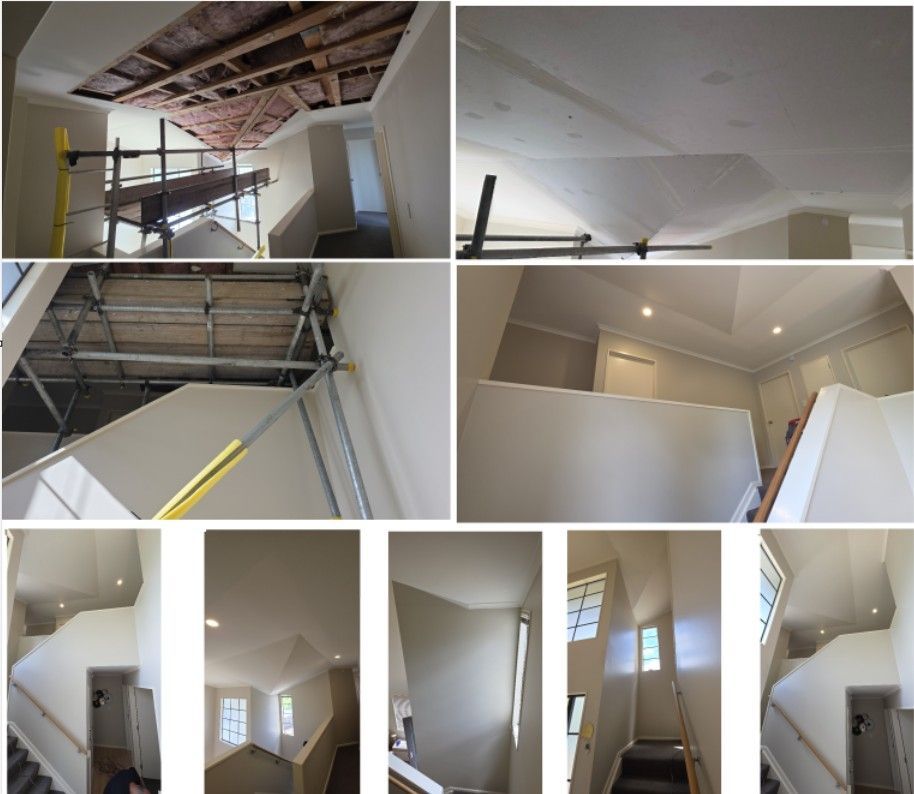
Our priority was to stop further damage and stabilise the property.
We carried out the following:
Drying is a critical stage — rushing this process can lead to long-term issues like mould, odour, or ongoing moisture problems.
This situation is more common than most people realise.
During summer, things like seed pods, branches, or debris can fall onto roofs and cause damage that isn’t immediately obvious.
Because the weather is dry, there are no immediate signs of a problem — everything appears fine.
Then, when the heavy rain arrives months later, that hidden damage suddenly becomes a pathway for water, and the issue shows up inside the home.
A small impact on a roof can go unnoticed — but once water finds its way in, the damage can escalate quickly.
This is why:
At Aries Builders, we often see how minor external damage turns into major internal repairs — not because of neglect, but simply because it’s hidden.
In this case, a single seed pod created a chain reaction that only revealed itself under the right conditions.
The good news?
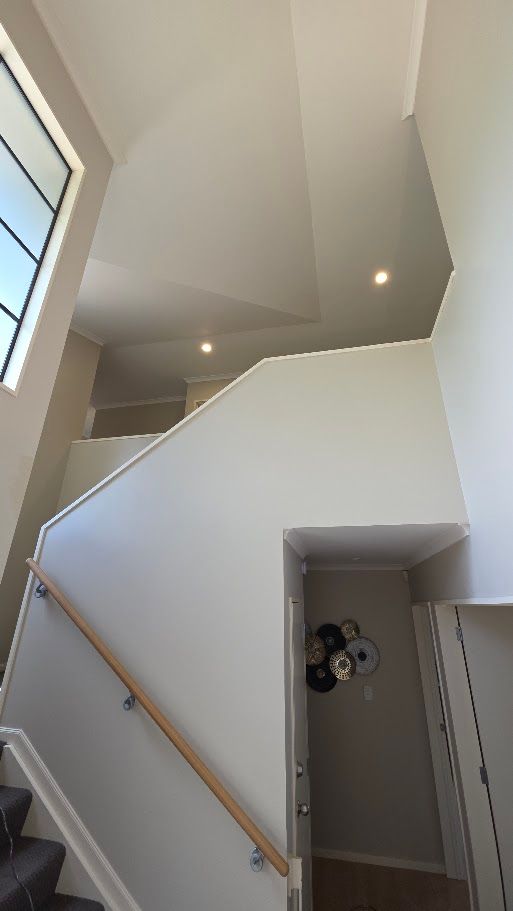
With the right approach — identifying the source, stopping the ingress, and properly drying the structure — the damage can be controlled and the home restored safely.
Building repairs, water damage and renovations across Auckland. Our builders on the job, all the right trades brought together.
All Rights Reserved | Aries Builders Ltd · Established 1988