
Why Mould Grows on Roof Plywood First (Not Framing) – A Common Hidden Issue in NZ Homes hygroscopic material
Why Mould Grows on Roof Plywood First
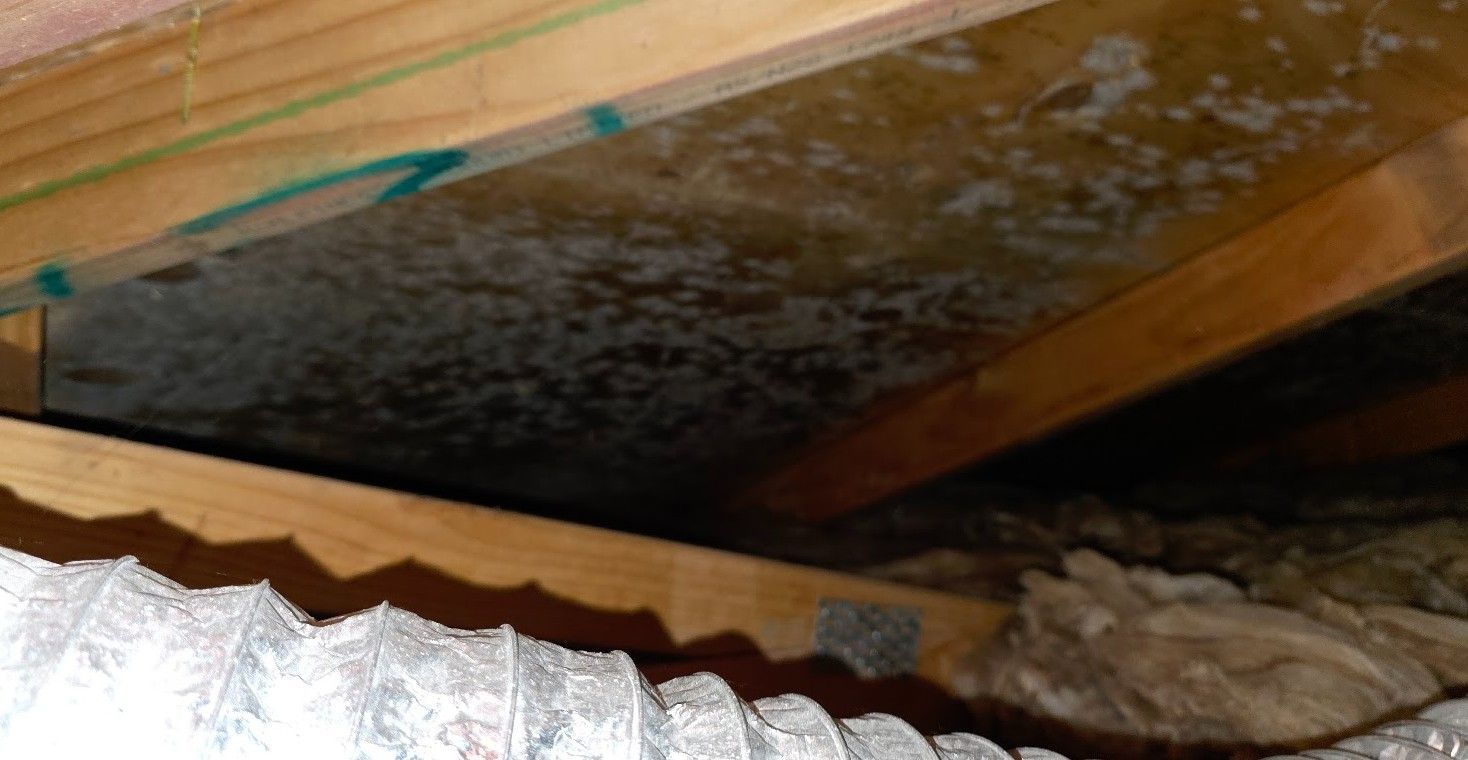
Over the years, we’ve come across this same pattern time and time again, and it’s one that can easily be misread if you haven’t seen it before.
You climb up into a roof space—often above a bathroom or another high-moisture area—and you’ll see mould growth across the underside of the plywood sheeting. What makes it interesting is this:
- The plywood is covered in mould
- The timber framing (rafters, trusses, nogs) often has little to no mould
- The areas where nails have come through the roofing and chipped the plywood are completely clean
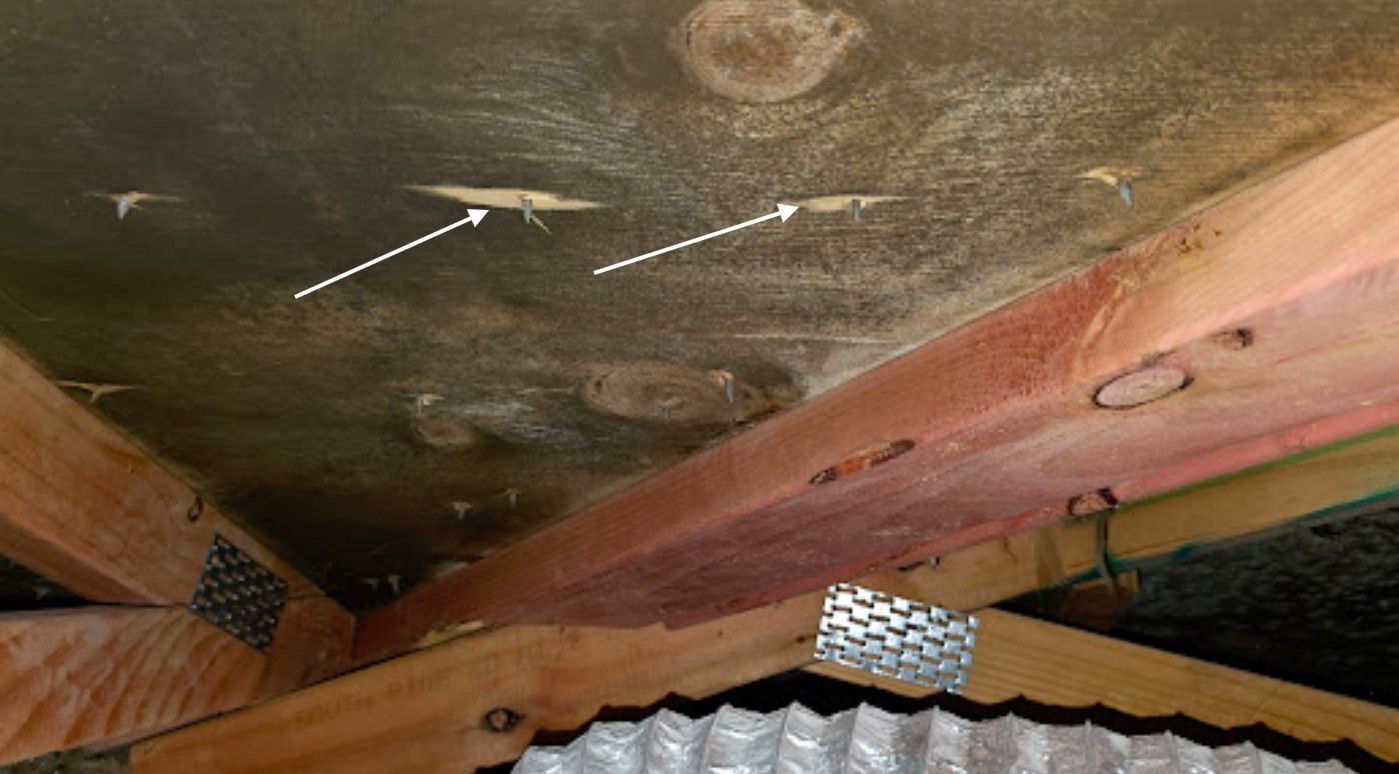
At first glance, it can throw you off.
You might start thinking:
- Were the sheets installed damp or already mouldy?
- Is this old mould that’s just sitting there?
- Is there a hidden leak somewhere?
And to be fair—those are all reasonable thoughts.
What’s Actually Happening
After seeing this across multiple jobs and digging deeper into it, the pattern starts to make sense.
In most cases, this is not a leak—it’s a ventilation and condensation issue.
Moisture from inside the home—typically from:
- Showers
- Baths
- Cooking
- General humidity
makes its way into the roof cavity. This can happen through:
- Extractor fans that are undersized or not used properly
- Ducting that is inefficient or restricted
- Small gaps around penetrations or fittings
Once that moisture enters the roof space, it has nowhere to go if ventilation is poor.
Why the Mould Grows on the Plywood First
This is the key part—and the part most people don’t realise.
The underside of the plywood sheathing is typically the coldest surface in the roof space. When warm, moist air hits that colder surface, it condenses into a fine layer of moisture.
That thin film of moisture is exactly what mould needs to grow.
Plywood also provides an ideal surface for early mould growth because:
- It has a flat, continuous surface where condensation can sit evenly
- The manufacturing process exposes wood fibres and resins, which mould can feed on
- It tends to stay damp longer than smaller timber sections
Why the Framing Often Looks Fine (At First)
The framing timber (typically H1.2 treated in roof spaces) often doesn’t show mould in the early stages.
That’s because:
- It doesn’t hold surface moisture as evenly as plywood
- Air can move around it more freely
- It may stay slightly warmer than the sheathing
This is actually a good sign.
If you’re seeing mould on the plywood but not yet on the framing, you’ve caught the issue early—before structural damage has started.
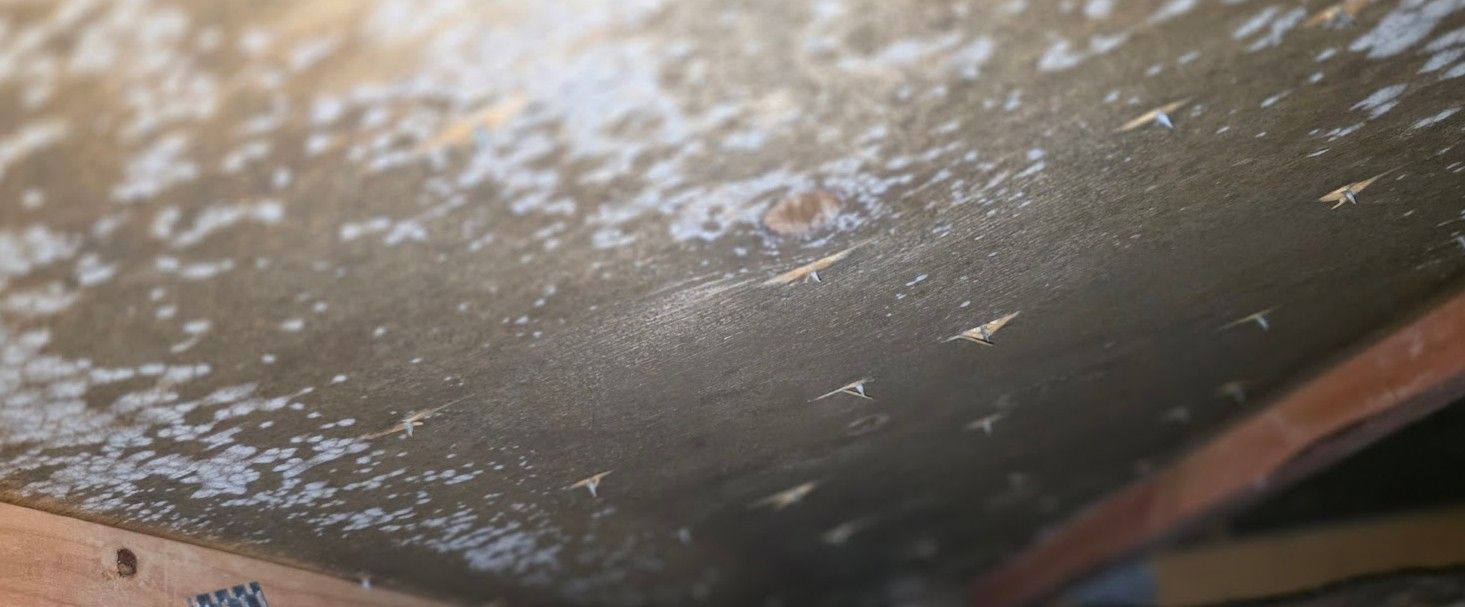
Why the Nail Chip Areas Stay Clean
This is the part that really catches people’s attention.
With shingle-style roofs, nails penetrate through the plywood and often leave small chipped areas where the timber has broken out slightly.
Those chipped areas are often completely free of mould.
The reason is quite simple when you think about it:
- The chipped areas expose fresh, rough timber fibres
- They don’t hold a consistent film of moisture like the smooth plywood surface
- They tend to dry out faster
Mould needs a stable, slightly damp surface to establish. Those chipped spots don’t provide that environment—so mould doesn’t take hold there in the early stages.
When This Becomes a Bigger Problem
If the moisture issue isn’t addressed, things can go downhill quickly.
In roof systems that are:
- Fully sealed (bitumen, torch-on, butynol, TPO membranes)
- Poorly ventilated
- Tight or low-pitch
moisture can become trapped for long periods.
Over time, that leads to:
- Mould spreading from sheathing to framing
- Timber remaining persistently damp
- Structural decay (rot) beginning
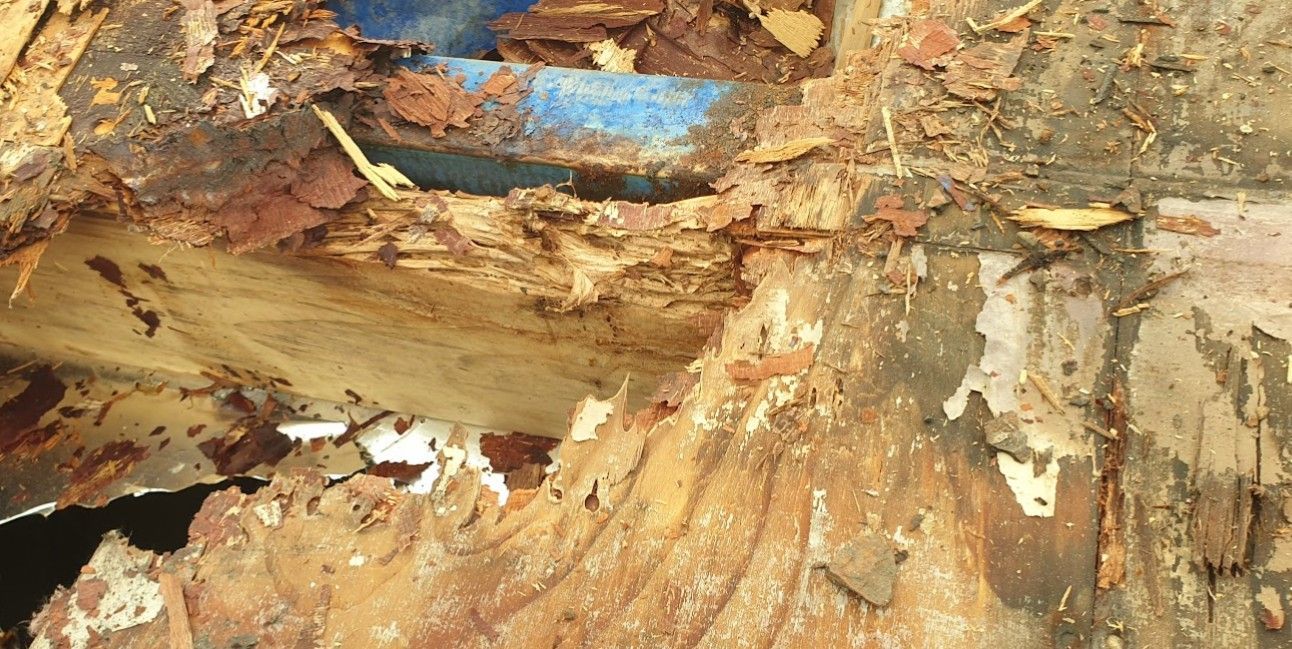
Real-World Example (Severe Case)
The image above is a good example of what happens when this is left too long.
In this case:
- A butynol-type membrane roof created a non-breathable system
- Moisture became trapped within the structure
- There was little to no ventilation
- The timber framing and substrate were exposed to prolonged moisture
The result:
Advanced rot and structural breakdown
This type of damage is often mistaken for a leak—but in many cases, it’s simply moisture with nowhere to go.
How We Fix
If you catch it earlier enough before rot.
The solution isn’t just to clean the mould—it’s to fix the environment causing it.
Depending on the design of the roof or deck, we typically recommend:
- Installing soffit ventilation (air intake)
- Adding roof ventilation outlets (e.g. mushroom vents / passive roof vents)
- In some cases, considering ridge ventilation systems
- Upgrading to a properly sized, ducted extractor fan (if possible)
The goal is simple:
Create airflow so moisture can escape
Final Thought
This is a great example of how easy it is to misread a situation.
What looks like:
- A leak
- Poor installation
- Or pre-existing mould
is often just:
A ventilation issue showing up in its early stages
And if you catch it early—when it’s only affecting the plywood—you can resolve it before it becomes a much bigger (and more expensive) problem.
Modern building design has started to address this more effectively. Many newer homes now incorporate improved ventilation strategies, such as:
- Roof ventilation systems integrated at ridge level
- Airflow pathways above insulation
- Ventilated purlin or batten systems that allow the roof to “breathe”
- Better-designed soffit intake and high-level exhaust ventilation
These systems help manage moisture before it has a chance to build up, reducing the risk of condensation forming on cold surfaces like roof sheathing.
That said, we still see a lot of older or tightly constructed roof spaces where ventilation wasn’t considered to the same level—and that’s where these issues tend to show up.